
MULTICULTURAL
CHRISTIAN ART
CHISHONA
CHRISTIAN ART
Shona is a Bantu language of the Shona people of Zimbabwe. The term is variously used to collectively describe all the Central Shonic varieties or specifically Standard Shona, a variety codified in the mid-20th century. Using the broader term, the language is spoken by over 14,000,000 people.


SWAHILI
CHRISTIAN ART
Swahili, also known by its local name Kiswahili, is a Bantu language originally spoken by the Swahili people, who are found primarily in Tanzania, Kenya and Mozambique. The number of current Swahili speakers, be they native or second-language speakers, is estimated to be over 200 million.
PORTUGUESE
CHRISTIAN ART
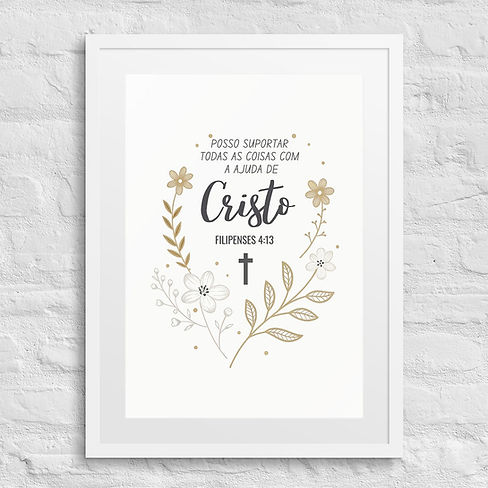
Portuguese is a Western Romance language of the Indo-European language family originating from the Iberian Peninsula of Europe. It is the official language of Angola, Brazil, Cape Verde, Guinea-Bissau, Mozambique, Portugal and São Tomé and Príncipe, and has co-official language status in East Timor, Equatorial Guinea and Macau. Portuguese-speaking people or nations are known as Lusophone (lusófono).

IGBO
CHRISTIAN ART
Igbo languages are spoken by a total of 31 million people. The number of Igboid languages depends on how one classifies a language versus a dialect, so there could be around 35 different Igbo languages. The core Igbo cluster, or Igbo proper, is generally thought to be one language but there is limited mutual intelligibility between the different groupings (north, west, south and east).
SPANISH
CHRISTIAN ART
Spanish is a Romance language of the Indo-European language family that evolved from the Vulgar Latin spoken on the Iberian Peninsula of Europe. Today, it is a global language with about 500 million native speakers, mainly in the Americas and Spain, and circa 600 million when including speakers as a second language.


RUSSIAN
CHRISTIAN ART
Russian is an East Slavic language belonging to the Balto-Slavic branch of the Indo-European language family. It is one of the four extant East Slavic languages, and is the native language of the Russians. It was the de facto and de jure official language of the former Soviet Union. Russian has remained an official language of the Russian Federation, Belarus, Kazakhstan, Kyrgyzstan, and Tajikistan, and is still commonly used as a lingua franca in Ukraine, Moldova, the Caucasus, Central Asia, and to a lesser extent in the Baltic states and Israel.
AFRIKAANS
CHRISTIAN ART
Afrikaans is a West Germanic language spoken in South Africa, Namibia and to a lesser extent Botswana, Zambia, Zimbabwe and also Argentinawhere there is a group in Sarmiento that speaks the Patagonian dialect. It evolved from the Dutch vernacular of South Holland (Hollandic dialect) spoken by the predominantly Dutch settlers and enslaved population of the Dutch Cape Colony, where it gradually began to develop distinguishing characteristics in the 17th and 18th centuries.


YORUBA
CHRISTIAN ART
Yoruba is a Niger-Congo language that is spoken in West Africa, primarily in Southwestern and Central Nigeria, Benin, and parts of Togo. It is spoken by the Yoruba people. Yoruba speakers number roughly 50 million, including around 2 million second-language or L2 speakers. As a pluricentric language, it is primarily spoken in a dialectal area spanning Nigeria, Benin, and Togo with smaller migrated communities in Côte d'Ivoire, Sierra Leone and The Gambia.
HAITIAN CREOLE
CHRISTIAN ART
Haitian Creole is a French-based creole language spoken by 10 to 12 million people worldwide, and is one of the two official languages of Haiti (the other being French), where it is the native language of the vast majority of the population. It is also the most widely spoken creole language in the world. Northern, Central, and Southern dialects are the three main dialects of Haitian Creole.
